
Home>About Go Snowmobiling
Go Snowmobiling
Go Snowmobiling is a non-profit organization devoted to the sport of snowmobiling, working with industry partners, clubs and organizations, to assure the sport thrives into the future.
Our Mission & Vision
Mission
We proudly champion all snowmobilers and the snowmobile industry, fighting for our freedom to ride and to keep the spirit of snowmobiling alive.
Vision
A world where snowmobiling thrives through protected access, a united industry and a welcoming community for every rider.
Initiatives
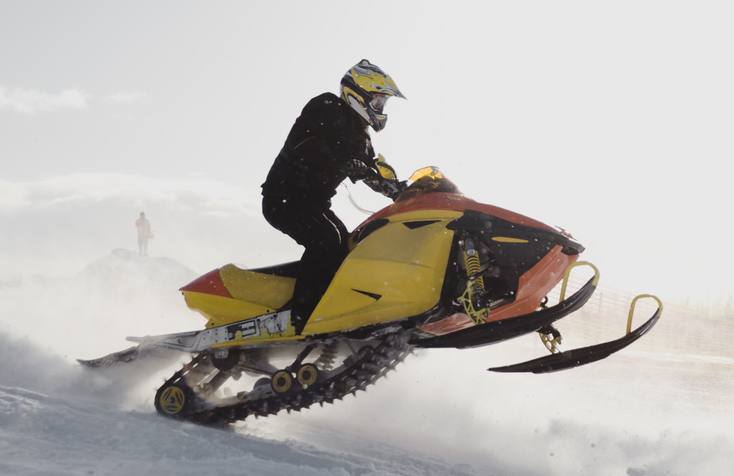
Safe Riders
The Safe Riders! Snowmobile Safety Awareness Program provides basic essentials about snowmobile safety and includes short quizzes to help test your knowledge about safe snowmobiling practices.
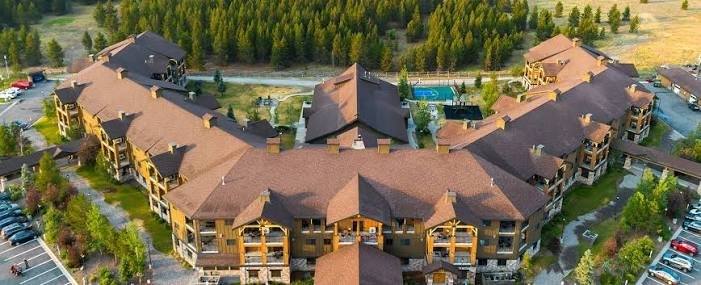
Economic Impact
We continually sponsor economic impact studies to show the importance of winter recreation to towns, counties, and states in the snow-belt region.
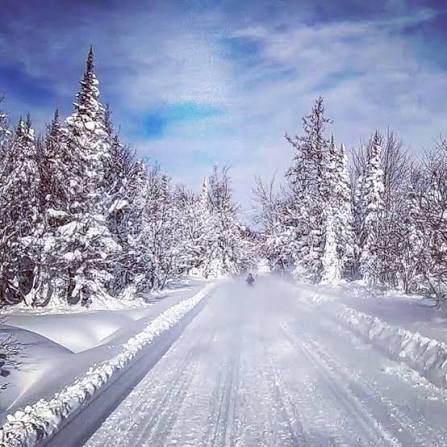
Land & Trail Access
We worked jointly with ACSA to intervene on behalf of states, clubs, riders and even the US Forest Service on land access issues, protecting riders when unnecessarily attacked. Especially in the Western U.S. Recent example: Intervention in the Over Snow Vehicle Plan in the Lassen Forest in California.
Stats & Facts
141,000 mi 124,000 km
There are approximately 141,000 miles / 124,000 km of signed and maintained snowmobile trails in North America that have been developed by snowmobile clubs and associations, usually in cooperation with provincial, state and local governments.
92,387
Sold worldwide in 2025
In 2025 there were 92,387 snowmobiles sold worldwide; 41,588 were sold in the U.S. and 34,828 were sold in Canada.
1.3 million
Registered in the U.S.
There are 1.3 million registered snowmobiles in the US and over 559,300 registered snowmobiles in Canada.
The Economic Impact of Snowmobiling
- United States$26 billion
- Canada$20.6 billion
- Europe$4 billion
Annual economic impact. Bars share one scale.
100,000+
Over 100,000 full-time jobs are generated by the snowmobile industry in North America. Those jobs are involved in manufacturing, dealerships and tourism related businesses.
Published yearly
Snowmobiling Fact Book
Our yearly snowmobiling fact book provides detailed information on the snowmobile industry including sales, registrations, the economic impact, the community, charities and more.
Economic Impact
$35B+Spent on snowmobiling each year
Snowmobilers in Canada and the United States spend over $35 billion on snowmobiling each year. This includes expenditures on equipment, clothing, accessories, snowmobiling vacations and more.
Snowmobiling is responsible for “spin-off” economic benefits such as:
- Jobs for 100,000 people
- Millions of dollars in tax revenues derived from snowmobile related business
- Millions of dollars in winter tourism spending
Economic Impact Studies
Point at or select a region to read its study.
CCSO Canada Study
According to the Canadian Council of Snowmobile Organizations (CCSO), this vital winter recreation sector drives significant financial activity nationwide.
- Economic Output
- $20.6+ Billion overall economic engine.
- GDP Contribution
- $7 Billion total contribution to Canada's GDP.
- Government Revenue
- $3.6 Billion collected in taxes annually across all levels of government.
- Employment
- 65,960+ Baseline jobs supported (multiplying during peak winter season).
- Trail Infrastructure
- 131,070 Kilometers of organized snowmobile trails managed by 730 volunteer-run clubs.
- Participation
- 1.5 Million family members participating in snowmobiling, backed by over 250,000 trail permits/memberships sold annually.
Saskatchewan
Commissioned by the Saskatchewan Snowmobile Association and conducted by MNP, the economic impact study highlights the sport's core financial and community contributions.
- Trip Expenditures
- Visitors and local residents spend nearly $88 million on fuel, food, accommodations, and retail shopping.
- Dealer and Business Revenue
- Powersport dealerships, equipment sales, rentals, and guiding services produce over $100 million in annual revenue.
- Trail Infrastructure
- Supported by over 11,000 kilometres of groomed trails managed across the province.
- Rural Tourism
- Out-of-town riders and local enthusiasts stimulate spending in rural “snowbelt” regions that rely on winter commerce.
- Club Operations
- Local volunteer-managed clubs maintain warm-up shelters and trail networks, which form the backbone of the province's winter recreation sector.
Wyoming
Comprehensive economic impact studies on snowmobiling in Wyoming—conducted by the University of Wyoming for state trail systems—show an overall economic contribution exceeding $255 million annually.
- Direct Expenditures
- Reaches around $194 million annually from resident and nonresident rider spending on lodging, food, fuel, and equipment.
- Resident vs. Nonresident Contributions
- Residents contribute roughly $88.2 million, while nonresidents generate about $71.4 to $109 million depending on the specific winter season and survey metrics.
- Secondary Impact
- Generates an additional $61 million in secondary economic ripple effects through regional business supply chains.
- Jobs Supported
- Accounts for the equivalent of 1,874 annual jobs across the state's tourism and service sectors.
- Labor Income
- Produces over $66.4 million in total employee compensation and wages.
- Government Revenue
- Yields millions in state and local tax collections via sales, lodging, and gas taxes.
Ontario
The Ontario Federation of Snowmobile Clubs (OFSC) released an economic impact report assessing the provincial trail network of over 30,000 kilometers.
- Total Economic Output
- Reaches up to $6 billion depending on optimal winter weather and riding conditions.
- Job Creation
- Sustains 9,307 full-time equivalent jobs across rural and northern regions.
- Government Revenue
- Generates $538 million in combined municipal, provincial, and federal taxes.
- Volunteer Value
- Contributes an estimated $16.4 million annually in unpaid local club labor.
- Small Businesses
- Serves as a financial lifeline for small businesses, lodging, and fuel stations in northern Ontario during winter months.
Education & Outreach
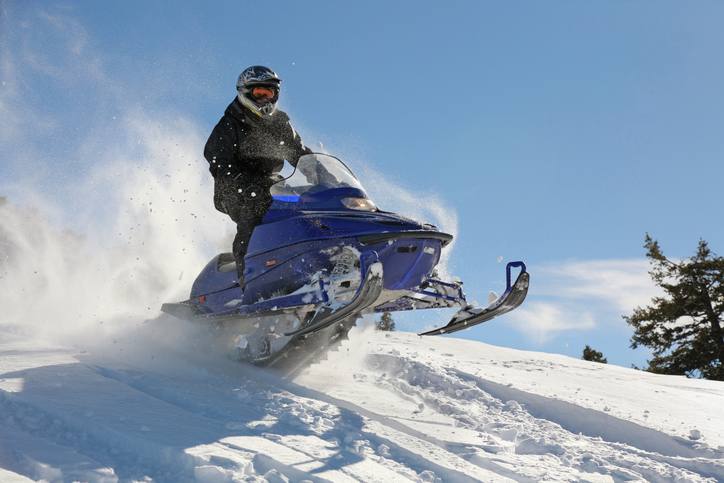
Safe Riders! Snowmobile Safety Awareness Program
The Safe Riders! Snowmobile Safety Awareness Program provides basic essentials about snowmobile safety and includes short quizzes to help test your knowledge about safe snowmobiling practices.
Land Access
Private Land
Private landowners are the backbone of the snowmobiling community. Across North America, the vast majority of local snowmobile trails cross private property, made possible only through the generous, voluntary permission of landowners.
Help Keep Trails Open
- Stay on marked trails: Respect boundaries and never trespass or create new paths.
- Obey signs: Follow all direction, speed limit, and closure markers set by local clubs.
- Minimize noise and litter: Pack out what you pack in and keep exhaust systems compliant.
- Support local clubs: Many community clubs host annual landowner appreciation banquets, dinners, or send thank-you notes to property owners.
Public Land
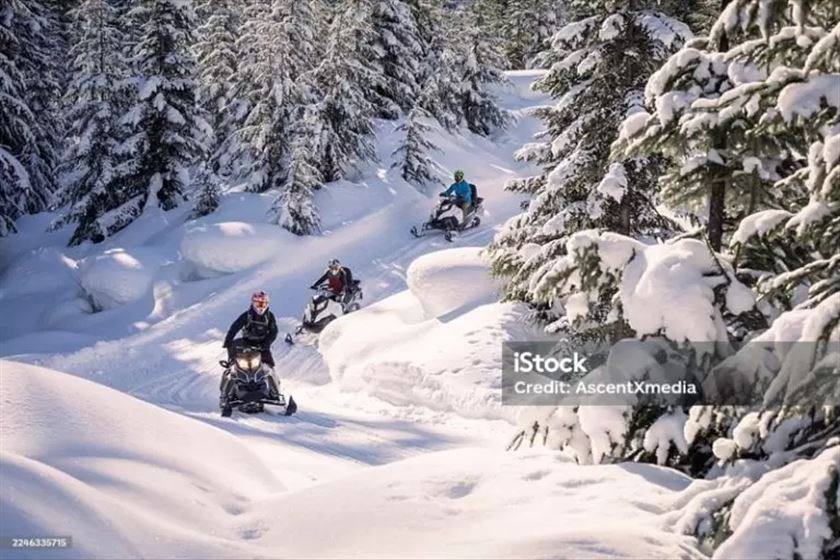
North America offers extensive public land for snowmobiling through national forests, state parks, and provincial lands, often managed via local club grants and public-private partnerships. Riders typically need local registration or trail permits, valid driver’s licenses for adults, and adherence to designated trail routes.
Help Protect Access
- Registration/Permits: Out-of-state or out-of-province riders usually need a specific trail sticker or local registration.
- Stay on Trail: Crossing closed wilderness areas, private land, or non-motorized tracks is strictly illegal.
- Wildlife: Be mindful of and respect wildlife in their natural habitat.
ISMA
The International Snowmobile Manufacturers Association (ISMA) is an organization representing the three snowmobile manufacturers and the parent organization of Go Snowmobiling. ISMA works with snowmobile associations, clubs and organizations to promote snowmobile safety, fight for land access, promote the sport of snowmobiling, track and report industry statistics and the positive economic impact of snowmobiling throughout the world.

Snowmobiler Profile
52
Years old
The average snowmobiler is 52 years old.
1,158 mi/ 1,864 km
Per season
Snowmobilers ride on average 1,158 miles / 1,864 km per season.
$2,873USD per season
Snowmobilers spend $2,873 USD on snowmobiling activities such as lodging, food, and fuel.
50%
Trailer to ride
50% of snowmobilers trailer to ride.
95%
A family activity
95% of snowmobilers consider it a family activity.
60%
Family 27%
Friend
Introduced to the sport by
60% of snowmobilers were introduced to the sport by family, and 27% by a friend.
The Main Reason People Snowmobile
To view scenery
To be with friends
To get away from usual demands of life
To do something with their family
To be close with nature
Partnerships/Sponsors



FAQs
Where do snowmobilers ride?
Approximately 80 percent of snowmobilers use their snowmobile for trail riding and touring in marked and groomed trails. The other 20 percent of snowmobilers use their snowmobile for work and ice fishing.
Who maintains snowmobile trails?
In the U.S. and Canada, snowmobile clubs construct, maintain and map trails, usually in cooperation with provincial, state and local governments.
Are snowmobiles used only for recreation?
No, they serve many other functions. In remote portions of Canada and the U.S., snowmobiles are some residents' primary mode of transportation. Snowmobiles are relied upon by law enforcement units throughout the snowbelt for search-and-rescue work and emergency missions. They are also used by surveyors, ranchers, public utility employees, environmental and wildlife scientists, and countless others. Snowmobiles are also widely used by cross country ski race officials, dog sled races and by ski patrols for rescue purposes.
I want information on a specific snowmobile. How can I get that information?
Each manufacturer has specific information on each of their models. Please contact the manufacturers through their websites, or contact your local snowmobile dealer.
I am interested in snowmobile racing schedules and locations, how do I find out where snowmobile races are occurring?
For all snowmobile racing information, please call the International Snowmobile Racing Association (ISR) at 262.335.2401 or visit their website at www.isrracing.org.
How do I find out what trail conditions are or what is going on in an individual province or state?
Information for individual provinces and states including any riding rules and regulations are available from the provincial/state associations directly.
I am looking for repair parts and or information for my snowmobile, can you help me?
We recommend that you contact the dealer you bought your snowmobile from or from your local dealer. They should have the necessary parts and expertise to help you repair your snowmobile or they can put you in touch directly with the manufacturer or supplier of any repair parts.
I have an antique snowmobile and was wondering if you can help me find information on shows and or repair parts for my machine?
The Antique Snowmobile Club, located in Minnesota is eager to help you and has a great deal of information on antique snowmobile shows, parts, etc.